Not THIS Again...
....We did the era of 'beauty' being defined exclusively by super-thinness in the 90s. Women my age still bear the scars.

I was a teenager during the 1990s. I don’t know any woman my age who emerged from that era unscathed, body image wise.
For those too young to remember: The 90s were a period marked by one very specific, narrow standard of female beauty. Representation of any woman who wasn’t white, blonde and extremely slender was scant. It was the era of low-slung jeans with hip bones protruding over the waistband. Of ‘washboard’ abs, rigorously ironed, centre parted hair and a worrying acceptability of the notion that the ‘schoolgirl’ aesthetic was ‘sexy’.
Eating disordered behaviour was normalised, even advocated. Celebrities had every inch of their bodies scrutinised. Magazines drew red rings around so-called ‘flaws’, which might include a roll of skin around their stomach as they bent over, or a patch of cellulite on their thigh. It was considered entirely normal to get out a set of scales and demand famous women stepped on them during televised interviews. Beyonce was criticised for being ‘fat’ (yes, really).
For most of us who grew up in this crucible of toxicity, it has taken us decades to shake-off the legacy. In this interview with Hello! Magazine, I describe how it contributed to the eating disorder I endured for eight years.
The 90s weren’t an anomaly, however. In the West, our culture has celebrated smallness in women for the majority of the 20th and 21st centuries. Which is why it was so infuriating when people tried to portray the body positivity movement as ‘promoting obesity/unhealthiness’.
This kneejerk clapback neglects to understand two things: Firstly, the aim of BoPo was not to replace the prevailing, extremely-thin beauty standard with a new, larger one. Its aim was to promote diversity and therefore the notion that there is no universal standard. Some people are naturally predisposed to slenderness, others will never attain it no matter how much they punish their bodies in that pursuit. It’s all fine. All bodies are worthy of respect and there are a gazillion ways to be beautiful.
Secondly, in the context of a society which has championed thinness for a century, it is literally impossible to ‘promote obesity’. There is tonnes of evidence to support the idea that being surrounded exclusively by images of extremely thin bodies causes and exacerbates eating disorders in women and girls. There is no credible evidence which suggests it works the other way around. The tide of the water we are swimming in is too strong.
Furthermore, the scientific consensus is that those who respect their bodies naturally make healthier food and exercise choices (because they are in tune with their bodies’ needs, rather than attempting to override them). There is also evidence that those who like themselves before embarking on a fitness journey (i.e. are working out to get stronger/fitter and reserve judgment on any changes which might happen to their body as a result) are more likely to embed exercise habits into their routines long-term.
The HAES (health at every size) and BoP movements, whilst imperfect, basically had it right, if the long-term goal is for the population to enjoy better physical and mental wellbeing.
So, imagine the shock, alarm and outrage experienced by women my age when a combination of rising fascism (which always promotes the idea that women should be as tiny as possible to keep them distracted and exhausted) and GLP-1s entered the chat in 2024 and ushered back a trend for super-thin bodies. Whilst it began some time before, many commentators have pointed to this year’s Oscars red carpet as visual evidence that our female celebrities are once again competing with each other to see who can be the smallest.
And the response? To claim that those who draw attention to this are ‘skinny shaming’ and that we ‘don’t know what these women are going through’ *pauses typing briefly to scream into a pillow*.
Look, I’m not saying we should go to the pictures of specific celebrities on social media and comment negatively about their appearance. That isn’t helping anyone and, if they are in fact in the grips of an eating disorder it will fuel it (anorexia in particular tends to operate on an ‘all attention is good attention’ format).
However, when 90% of the famous women we see are half the size they were two years ago that’s a phenomenon worthy of notice, if only because history has taught us the consequences.
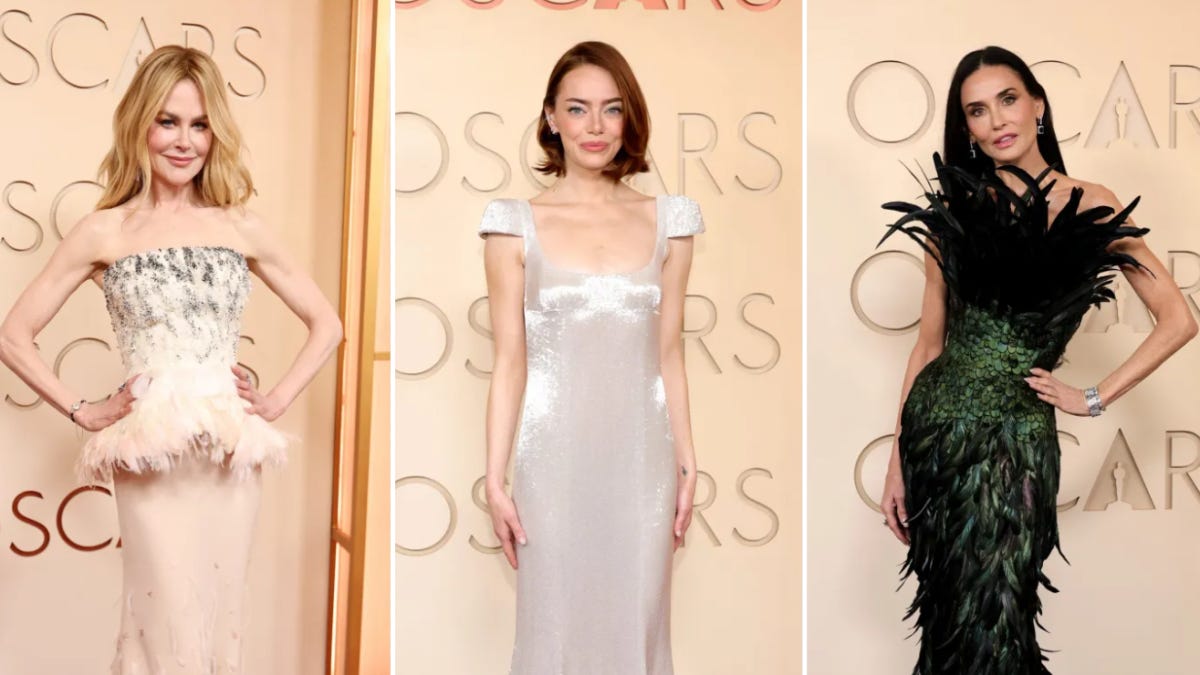
Many of the teachers I work with have already told me that GLP-1 use is rife amongst their pupils, who have somehow managed to obtain them despite not meeting the BMI requirements. Not only have the first longitudinal studies on GLP-1s suggested that most taking them regain weight faster than traditional dieters (see Shahroo Izadi’s book How Diets Made Us Fat for more info on how serial dieting is the biggest risk factor for developing binge eating disorder), but recent studies have also found people on GLP-1s are more likely to be seriously malnourished (see Dr Joshua Wolrich’s content for more on this).
Professionals working in health and education need to prepare themselves for another spike in mental and physical ill-health caused by being encouraged to see our bodies as trends and GLP1-s as a miracle ‘quick fix’.
IMO the issue with the Body Positivity movement isn't "promoting unhealthiness", I doubt that anyone is unaware of the health realities - my concern is that we need to aim towards talking as little as possible about size (and appearance more broadly). Society should transfer all this energy to discussing the things about human beings which actually matter.
My experience with Anorexia was that observing the body positivity movement only made the irrational, defiant monster in my mind stronger - of course it's not my experience that matters, but I think it can be forgotten that many things prompt opposing reactive movements.
Women need to be valued for our minds, I can't help but feel that having different body sizes going in and out of fashion doesn't progress this goal(?)